Centaurs of the Sands
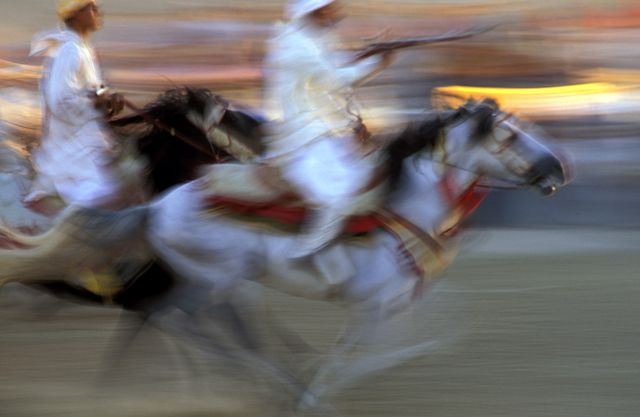
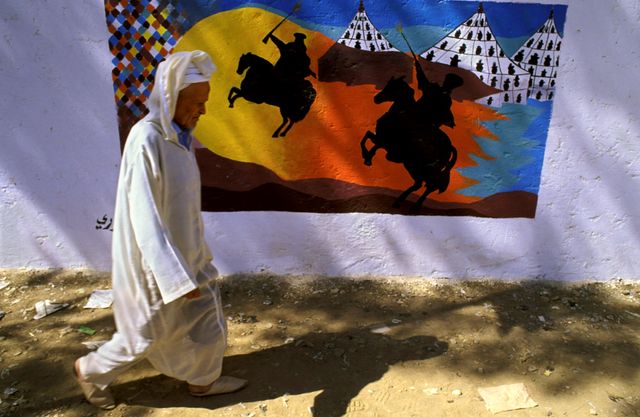
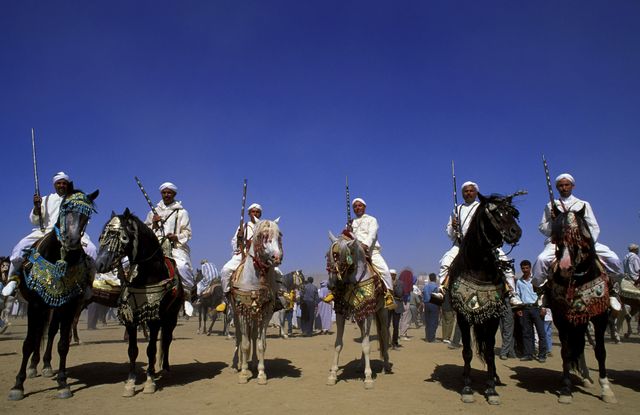
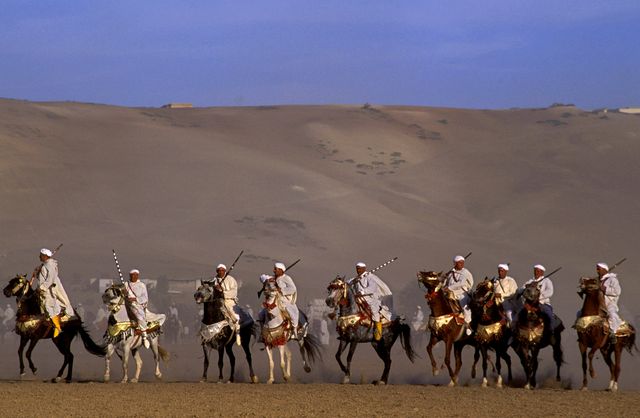
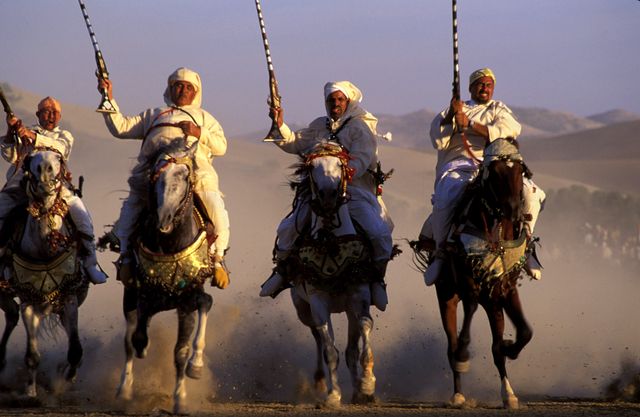
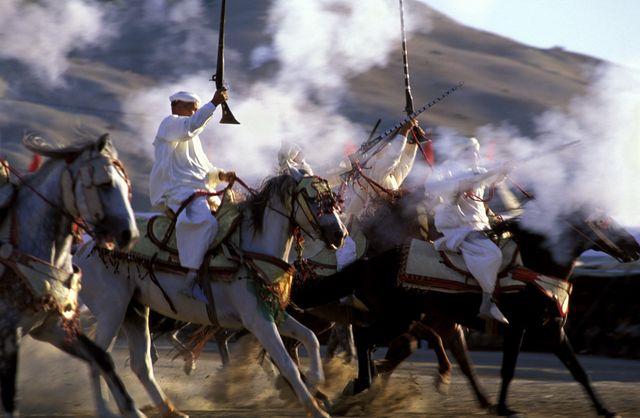
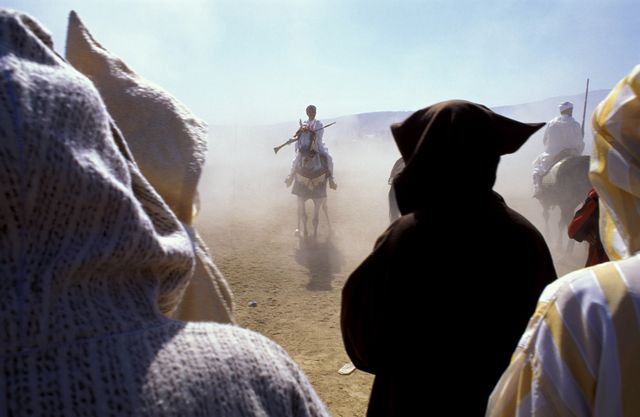
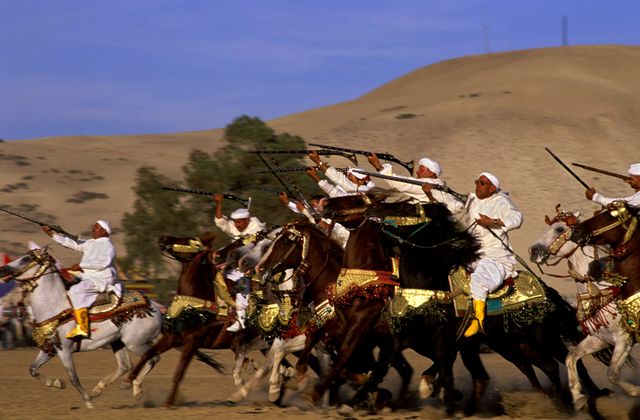
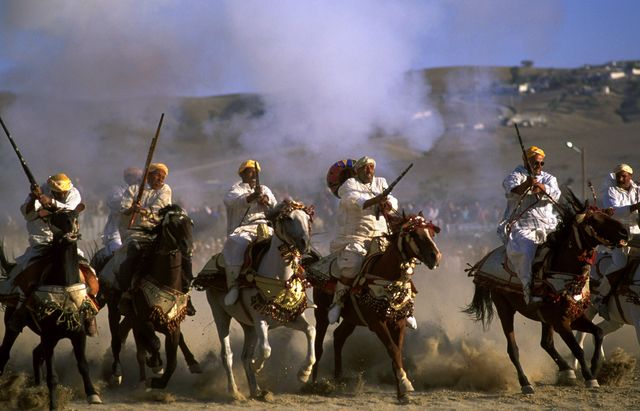
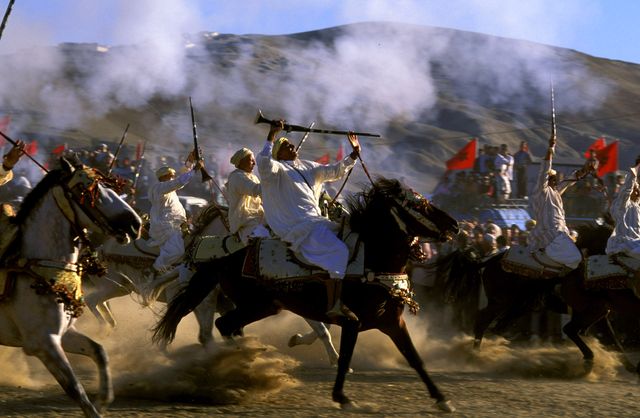
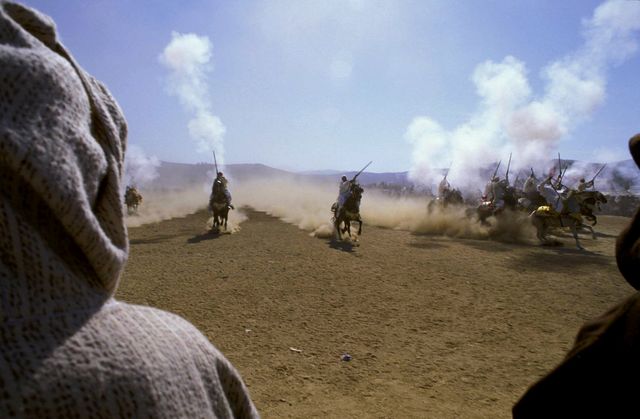
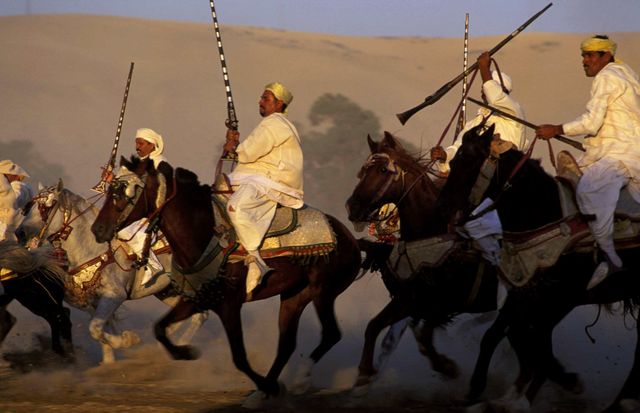
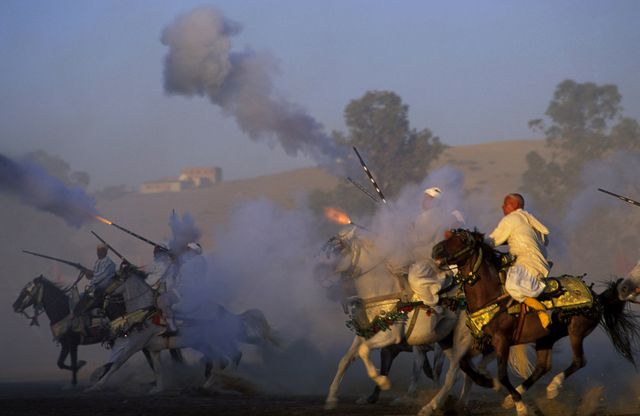
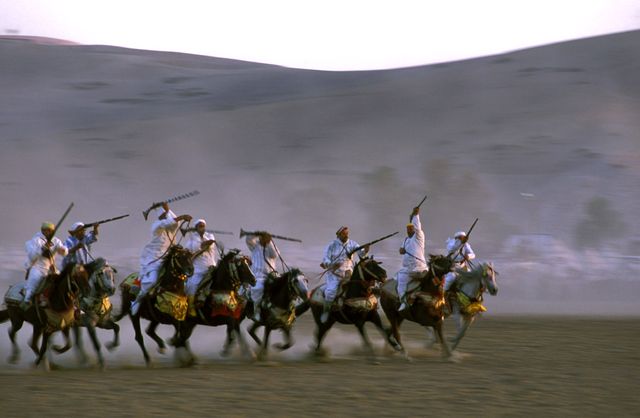
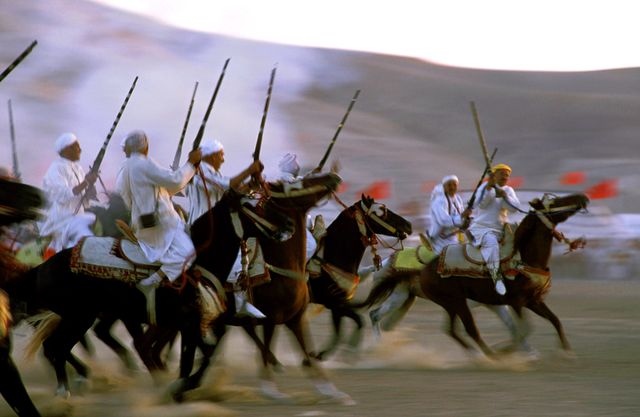
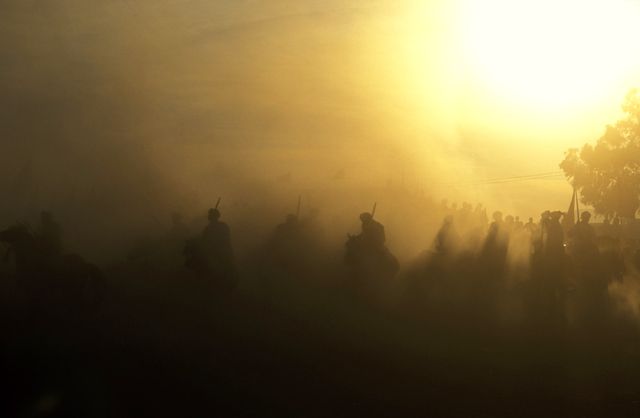
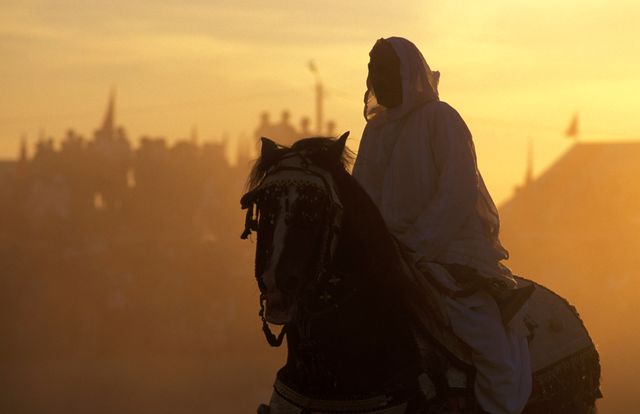
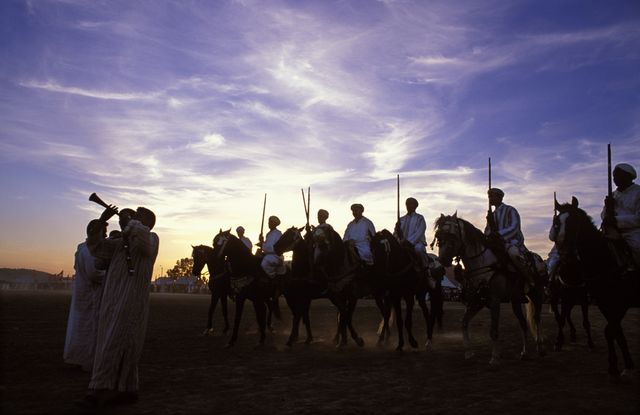
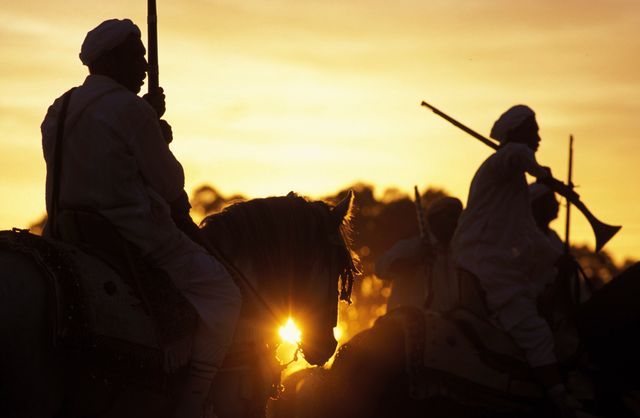
Rooted in Moroccan tradition, the Fantasia is a combination of charging on horseback and rifle shooting; though it is highly spectacular, there is more to it. It is above all a warrior game, impressive in itself, of course. It exists primarily to recreate the fighting conditions of yesteryear. The rules alone are a genuine rite.
Thirty thousand horses are bred in Morocco for the fantasias. Four thousand horsemen train and remain prepared for each one of them. This is the regulars' working capital for this typically Moroccan war game. There are others, occasional participants, who just wait to prove their worth and organize their "sorba". . . .
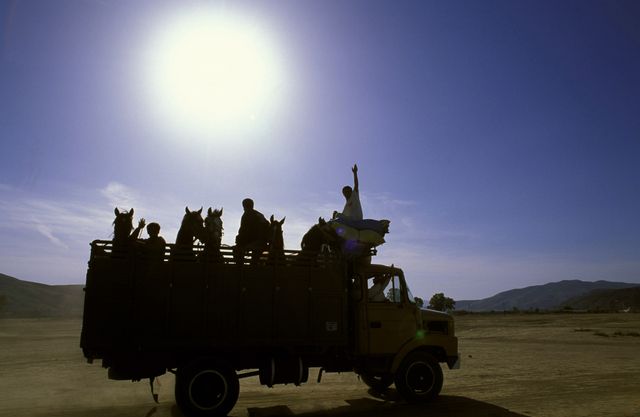
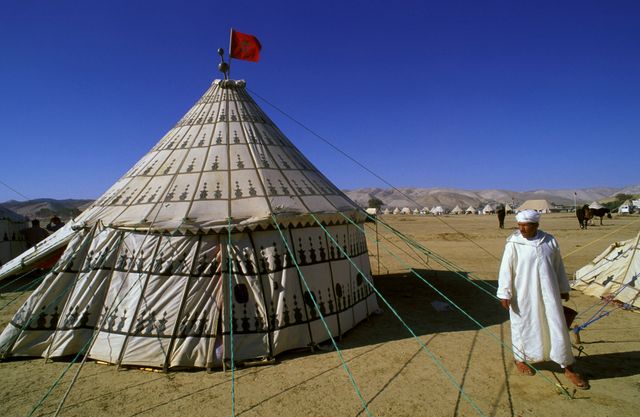
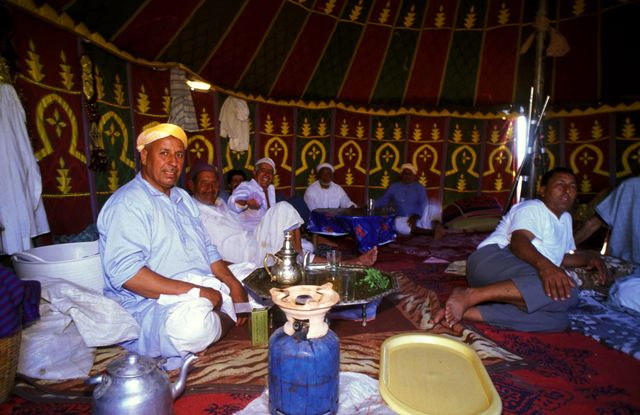
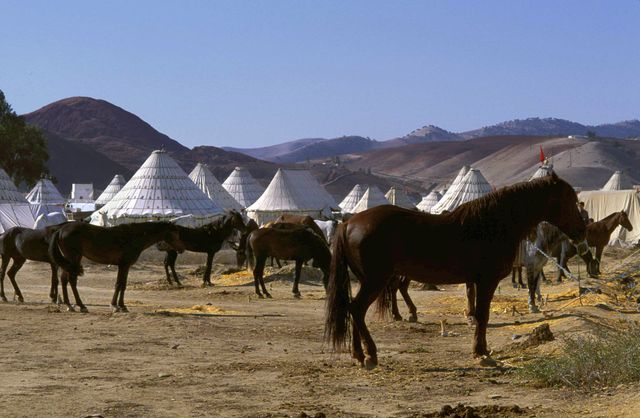
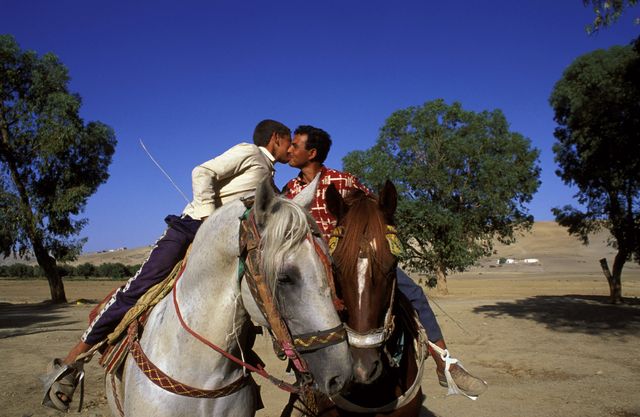
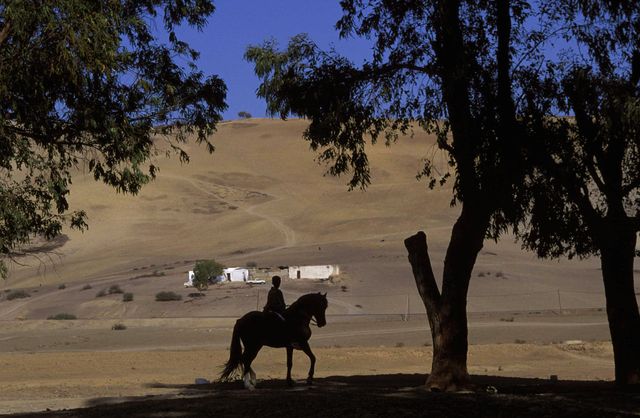
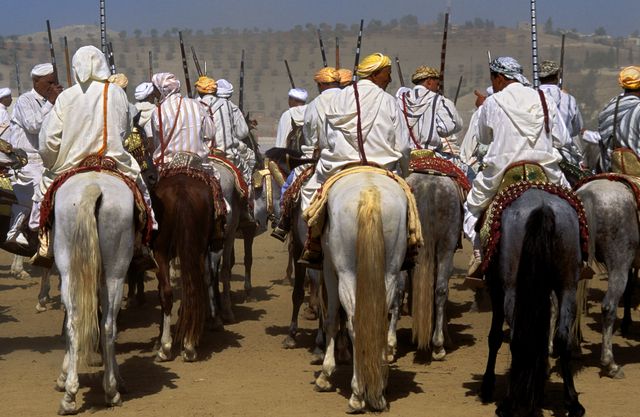
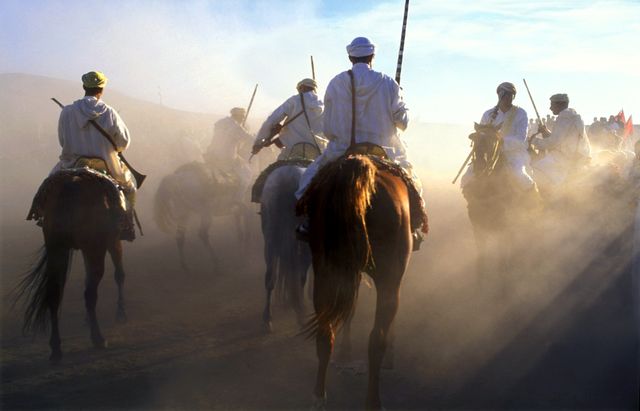
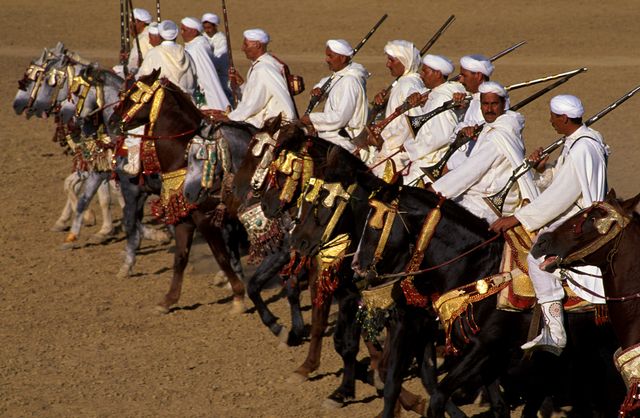
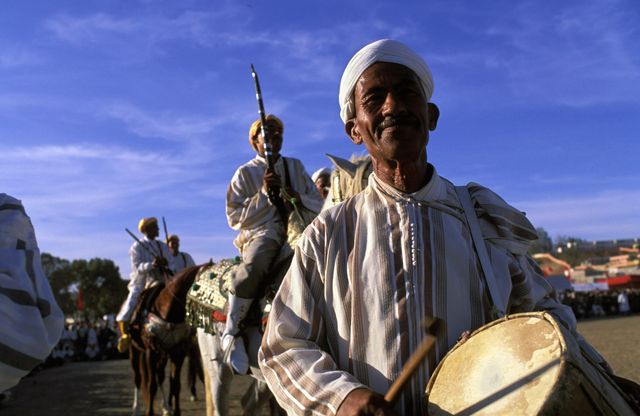
The sorbas are groups of seven to ten riders, whose ages range from fourteen to seventy, since a senior member must be present. They are commanded by a mokhadem whose authority is recognized by everyone. The sorbas are grouped together by ethnic group, or tribe, and they all know each other. In some exceptional cases, the sorbas can include as many as a hundred riders. These are primarily rural people, farmers and mountain dwellers, who sometimes come from very faraway, from the foot of the Atlas Mountains, to participate in the fantasia. Each family has at least one horse, which is only bred for pleasure. Participation in fantasias is far from being paid; it is purely an affair of honor. Fantasias are proof of the "soul of the lord" of those who take part in it. Winning is sublime, but participation is already highly respectable.
Physical and psychological preparation are necessary to participate in the fantasias. When the time comes, after proceeding through ritual ablutions, they are under divine eyes, invoking the protective God, "Al Hafid Allah", without which no Moroccan fantasia could begin.
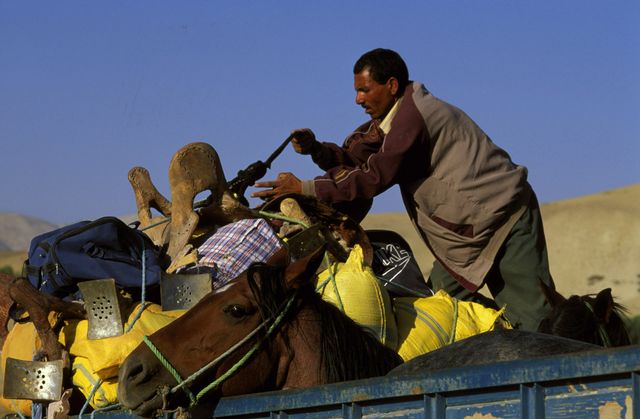
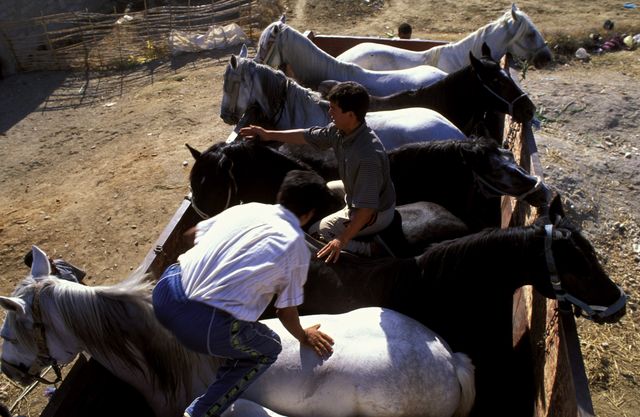
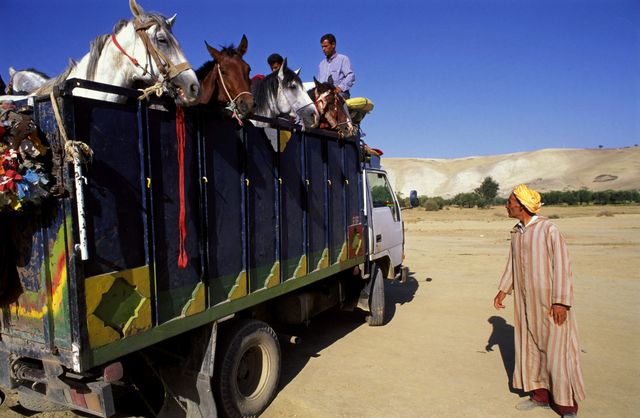
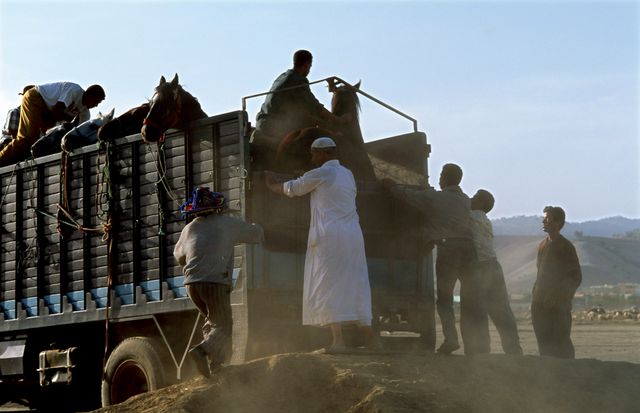
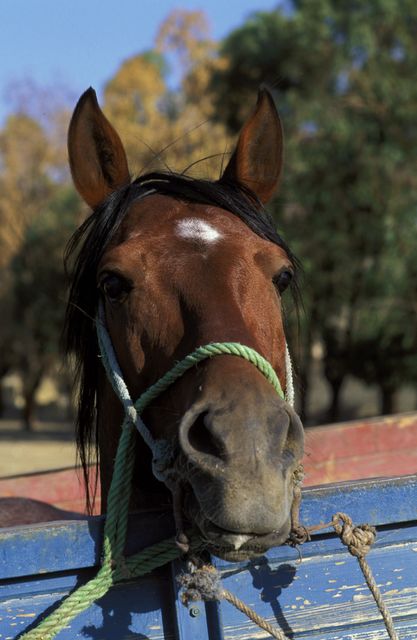
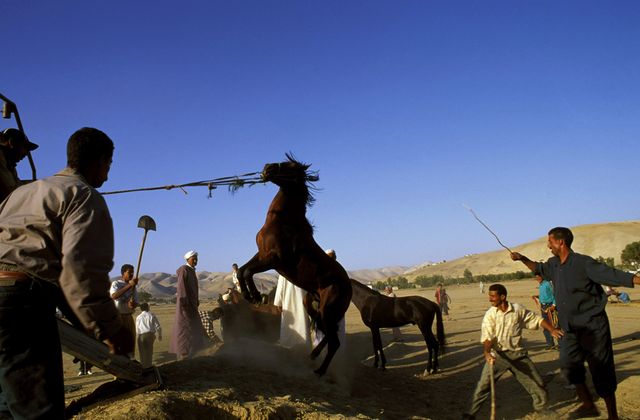
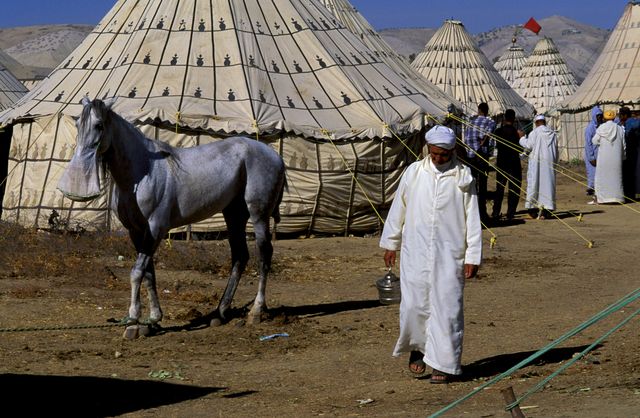
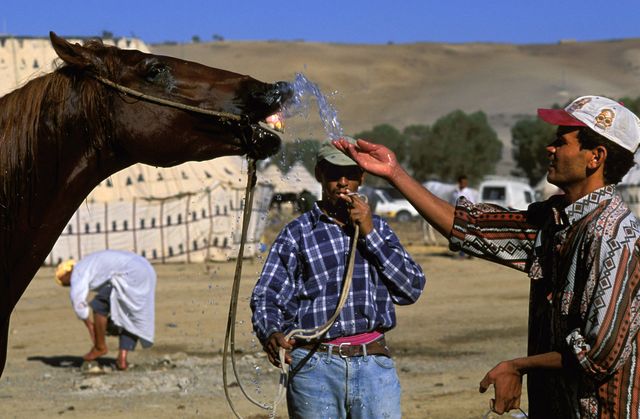
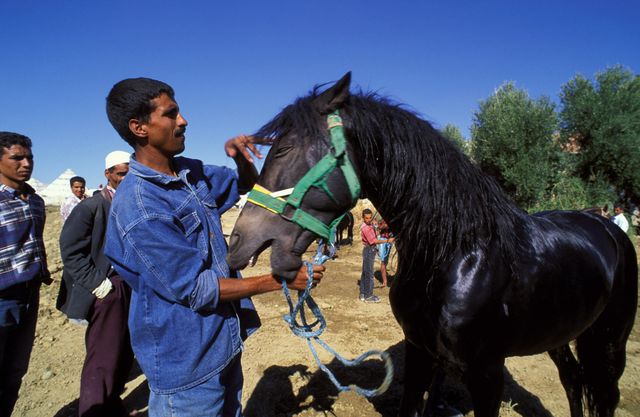
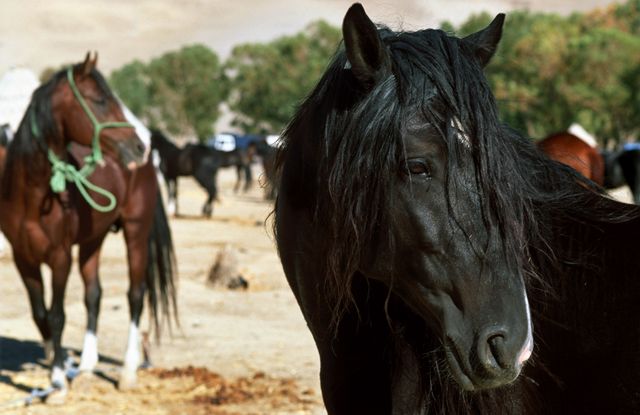
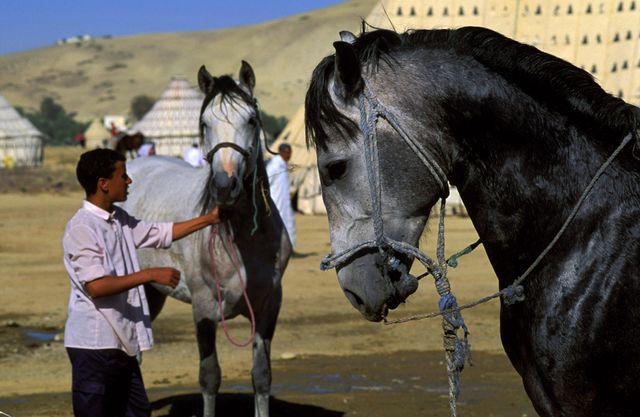
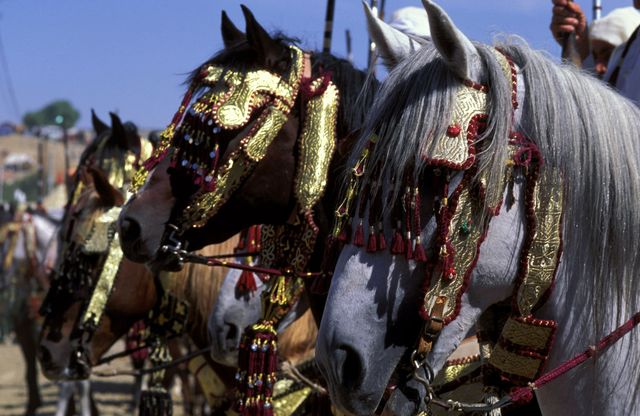
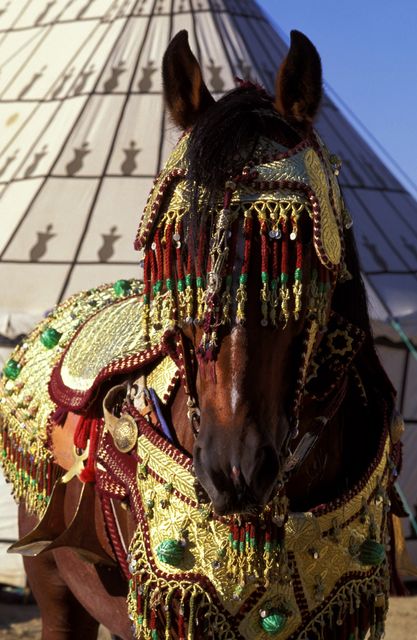
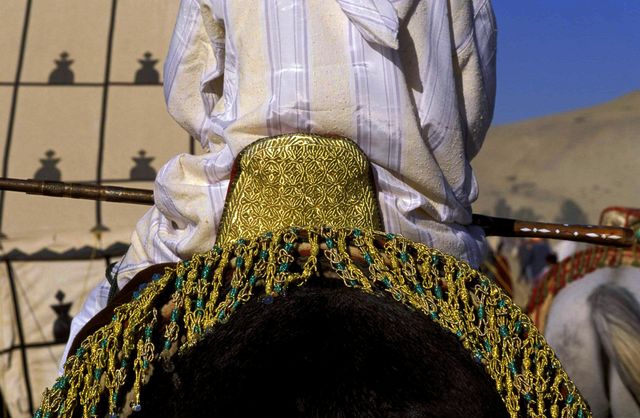
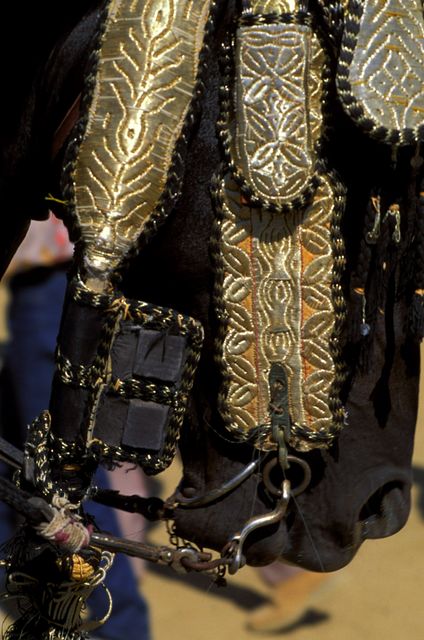
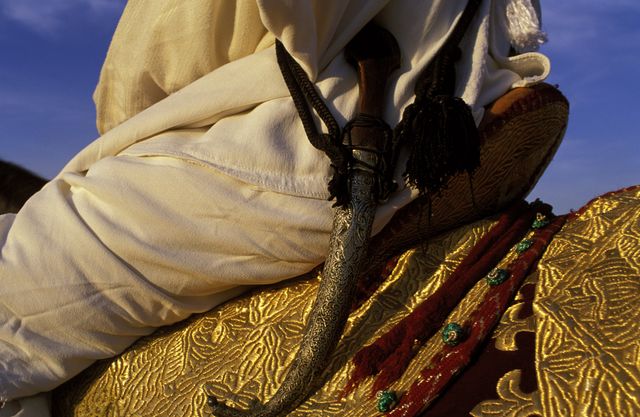
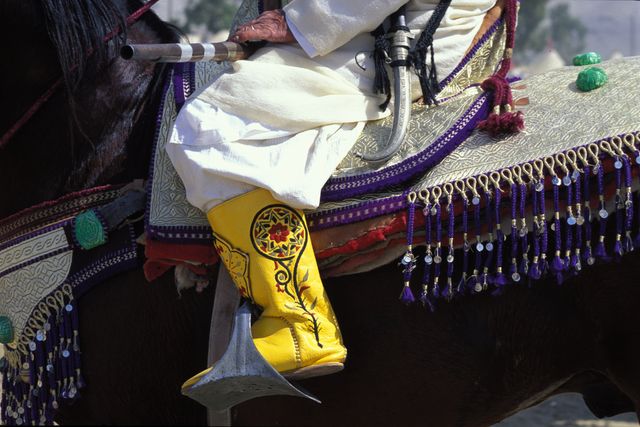
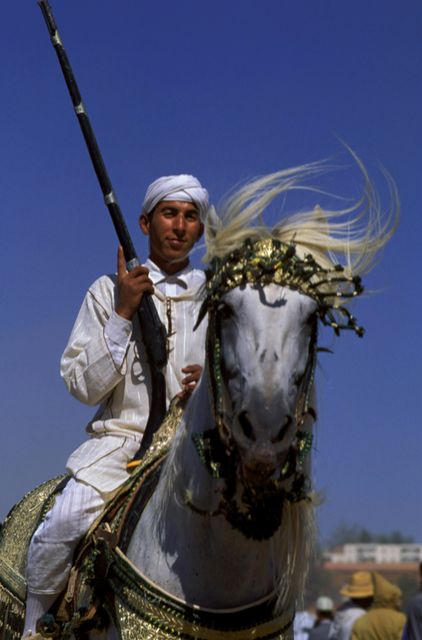
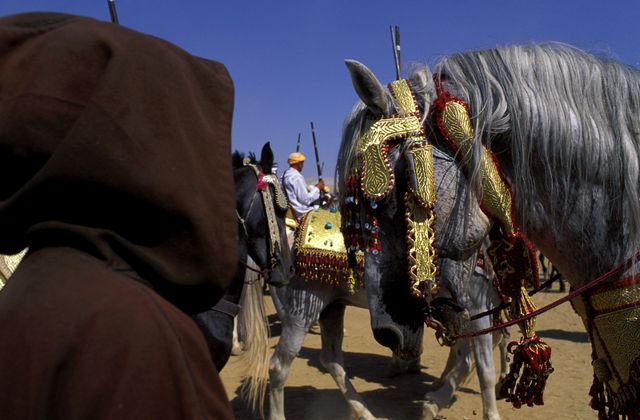
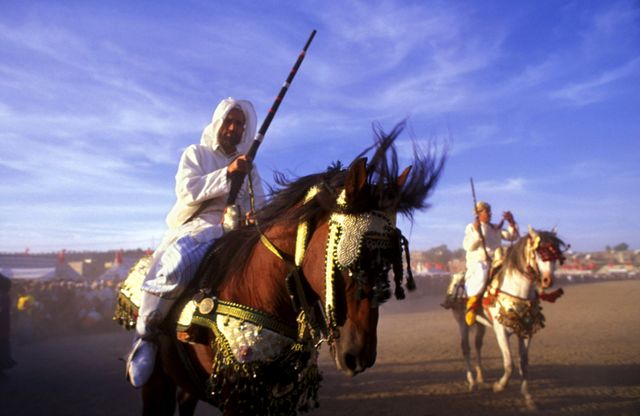
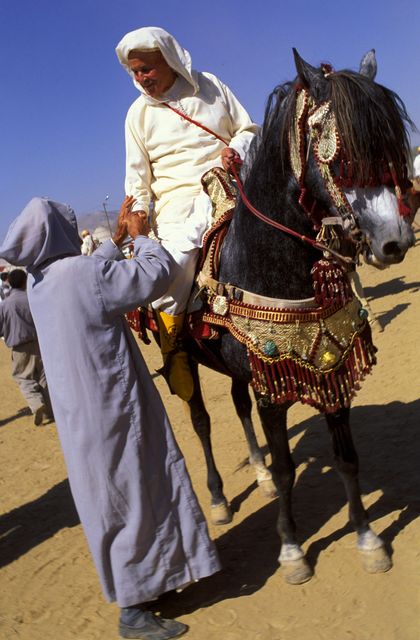
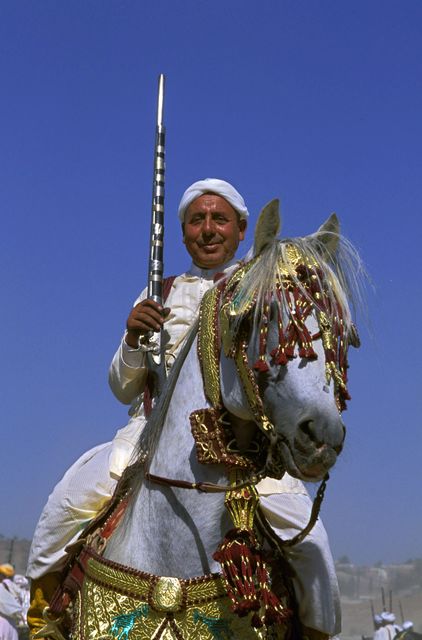
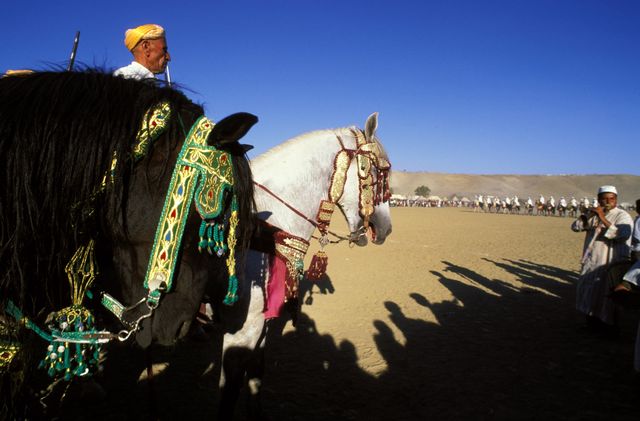
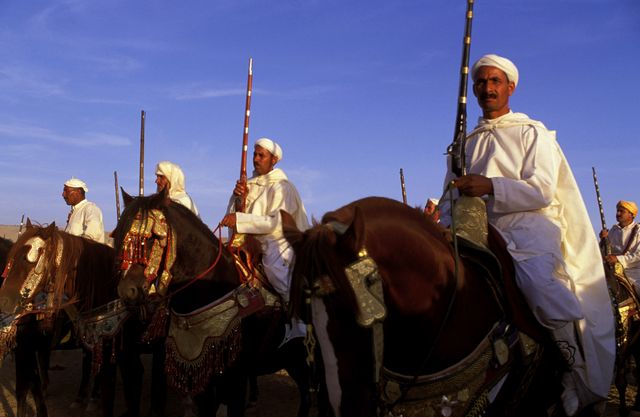
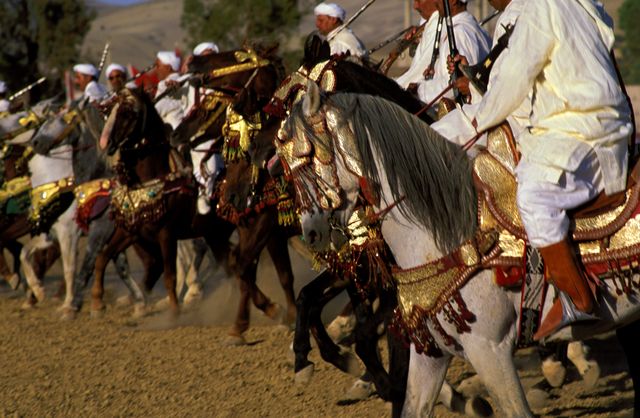
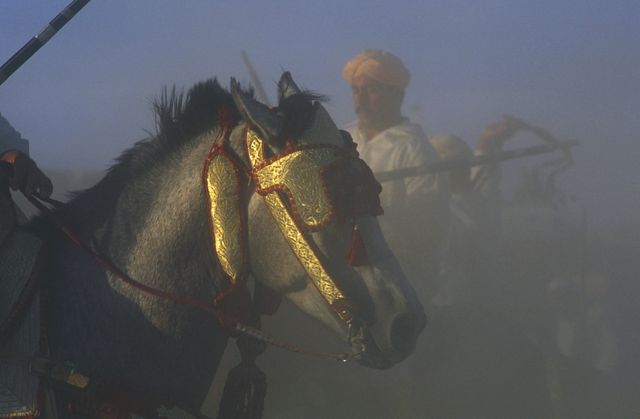
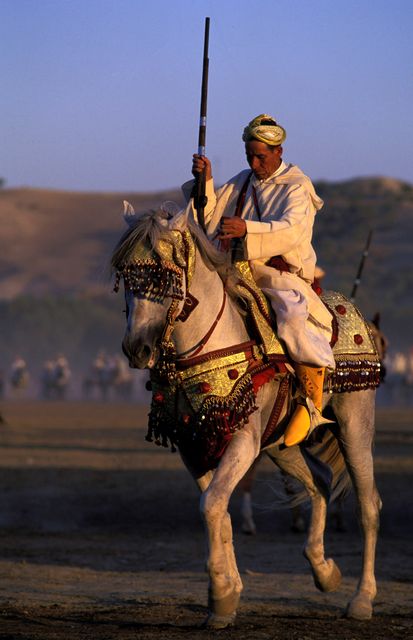
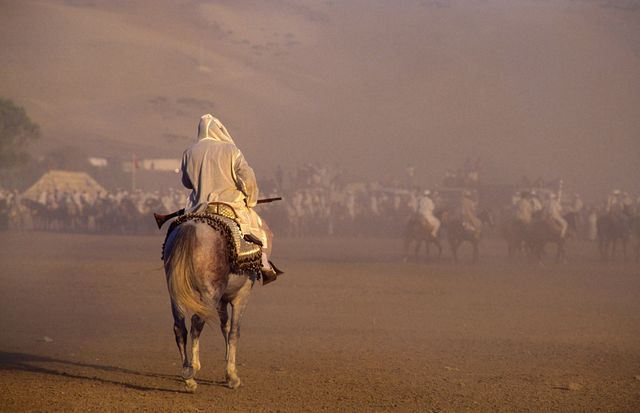
Full, baggy trousers often tucked into a leather sock, a jellaba, a cape, a turban and a shirt, all generally white, make up the costume of the fantasia horsemen. They symbolically carry a dagger, but the classic weapon of the fantasias is the large, finely damascened Moorish rifle, the mokhala. However, single- or double-barrelled hunting rifles are used more and more. The charges contain black powder, without projectiles. The horses, often grey, are purebreds: barbes and arabarbes. They are appropriately trained as of the age of two. The horsemen are honored to take great care of their horses and are very careful with their food.
- Photographer
- Patricio Estay
- Text
- Philippe Barbie de Préaudeau
- Country
- Morocco
- Published
- November 2002
- Images
- 59
- Reference
- 010-50001
 010_50001_01
 010_50001_02
 010_50001_03
 010_50001_04
 010_50001_05
 010_50001_06
 010_50001_07
 010_50001_08
 010_50001_09
 010_50001_10
 010_50001_11
 010_50001_12
 010_50001_13
 010_50001_14
 010_50001_15
 010_50001_16
 010_50001_17
 010_50001_18
 010_50001_19
 010_50001_20
 010_50001_21
 010_50001_22
 010_50001_23
 010_50001_24
 010_50001_25
 010_50001_26
 010_50001_27
 010_50001_28
 010_50001_29
 010_50001_30
 010_50001_31
 010_50001_32
 010_50001_33
 010_50001_34
 010_50001_35
 010_50001_36
 010_50001_37
 010_50001_38
 010_50001_39
 010_50001_40
 010_50001_41
 010_50001_42
 010_50001_43
 010_50001_44
 010_50001_45
 010_50001_46
 010_50001_47
 010_50001_48
 010_50001_49
 010_50001_50
 010_50001_51
 010_50001_52
 010_50001_53
 010_50001_54
 010_50001_55
 010_50001_56
 010_50001_57
 010_50001_58
 010_50001_59